


Background
On January 20th, 2025, the Chinese Artificial Intelligence (AI) company DeepSeek released its new R1 model that is said to have advanced reasoning capabilities, similar to those of OpenAI’s ChatGPT, which means that it’s able to solve complex problems that its user wants solved. DeepSeek’s developers state that claim that the R1 model only cost less than $ 6 million, which is less than the billions of dollars invested into ChatGPT. This claim isn’t accurate, as other research shows that the cost of building DeepSeek is much higher. According to Semianalysis, an independent research platform that specializes in AI research, the actual cost of DeepSeek’s models is “ higher than $500M.”
Many in the U.S. fear that DeepSeek could threaten the U.S.’s dominance in the AI industry. This is partly because DeepSeek’s R1 model is free for everyone, whereas ChatGPT’s latest models have limits for free users, and you have to pay to get access to the best features of ChatGPT. Additionally, despite restrictions on access to U.S. technology, China has been able to develop an AI system that is comparable to ChatGPT. This is especially true after DeepSeek replaced ChatGPT as the top app on Apple’s App Store a week after DeepSeek’s latest model was released.
How do these models compare? I only use the free version of ChatGPT, and so here are four ways DeepSeek stacks up against the free version of ChatGPT:
ChatGPT allows users to archive and share chats, while DeepSeek does not
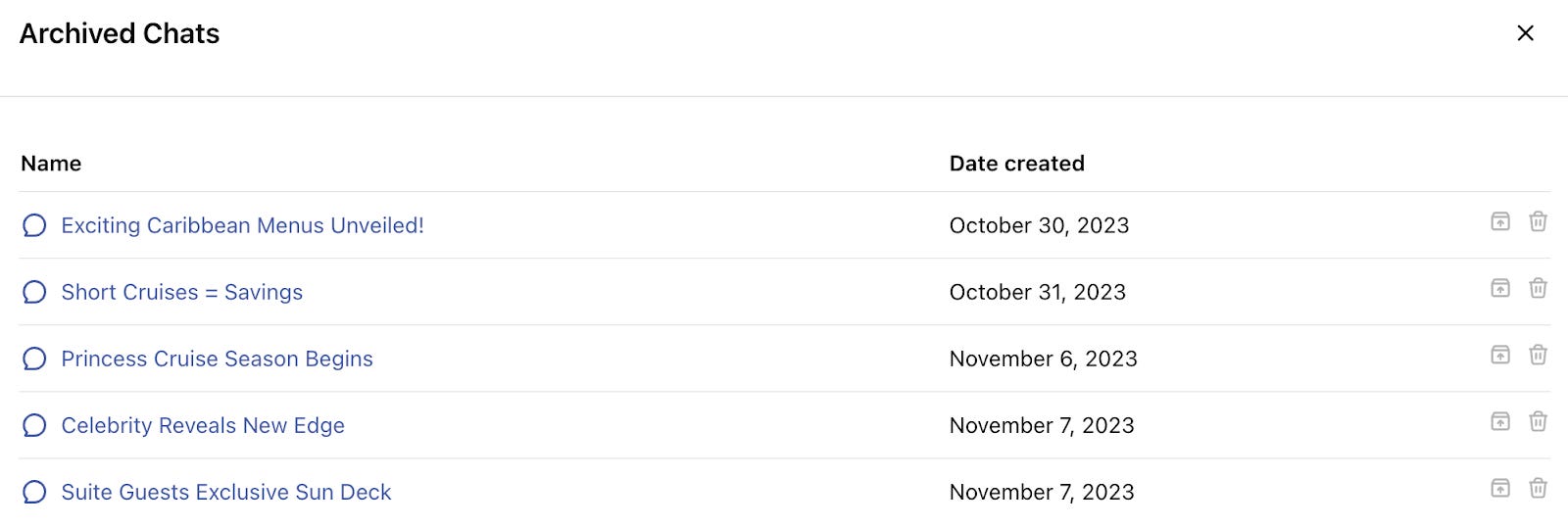
ChatGPT allows users to archive their chats, which is useful because those who use the chatbot can still keep their old chats while making room for new ones. To do this, a user needs to click the three dots at the end of a chat, and then ChatGPT will give the user the option to archive the chat. So far it appears that ChatGPT stores all the archived chats and does not delete them, but that isn’t confirmed. For example, I have chats that have been archived from October 2023, and more than a year later the archived chats are still available to be unarchived whenever a user wants to unarchive them.
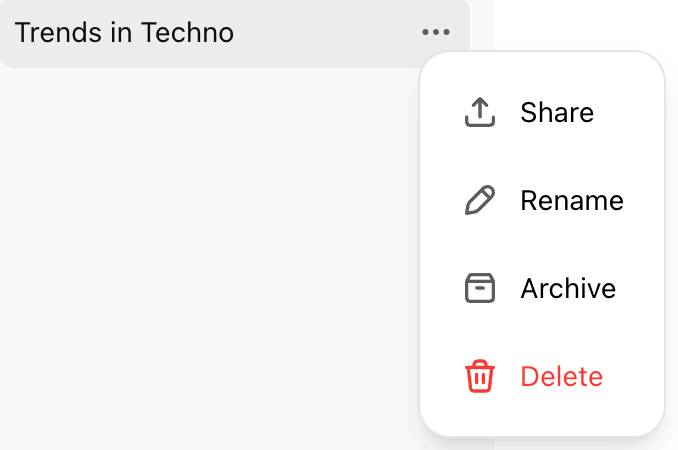
In the same vein, ChatGPT also allows users to share their chats with other users. To do this, a user needs to click the three dots at the end of a chat, and then ChatGPT will give the user the option to share the chat. ChatGPT creates a link that the user can then share with other people via a variety of different outlets such as LinkedIn, Facebook, and Reddit, and X; it also provides users with the option to make their chats discoverable by search engines if they want. This allows for collaboration on projects that might not have otherwise been possible.
DeepSeek currently doesn’t have these capabilities, which makes it harder to collaborate on a project or to organize chats.
DeepSeek’s responses are more specific to the request of the user, while ChatGPT’s writing is robotic and general.
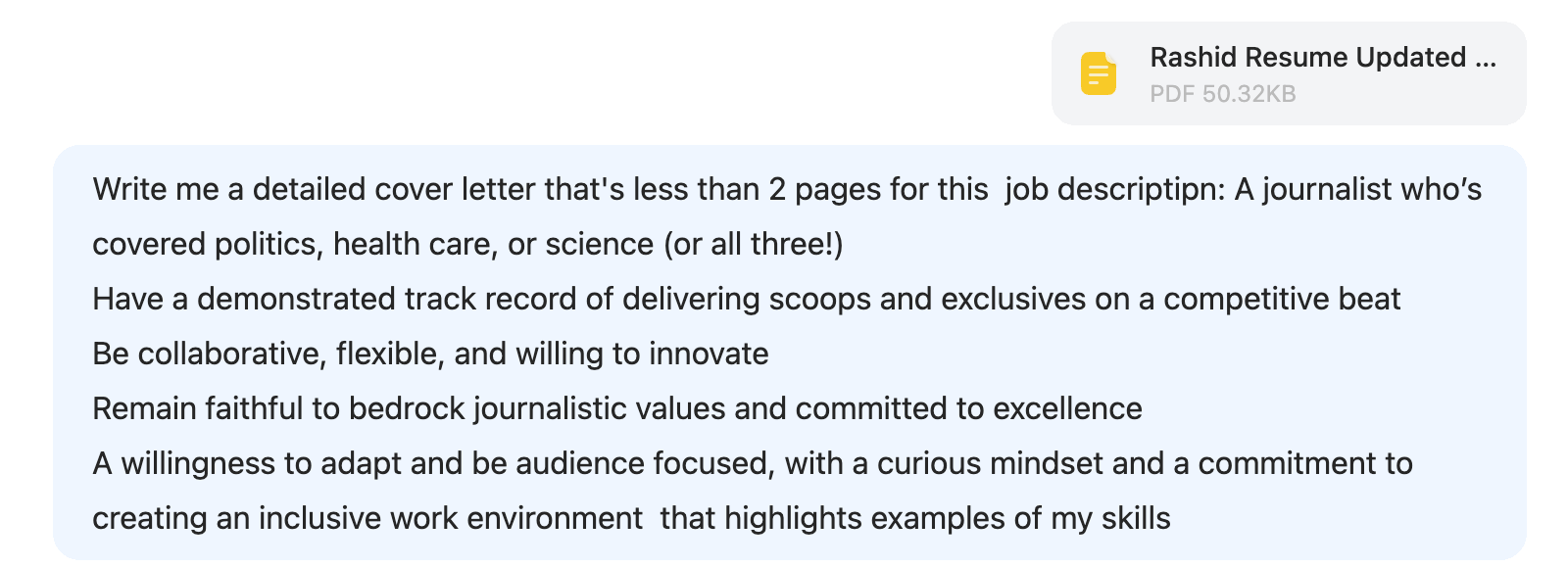
I uploaded my resume into both DeepSeek and ChatGPT and pasted the job description of a job that I was interested in. ChatGPT’s cover letter was very wordy but also generic and gave an overall description of my skills and experiences in a way that felt long and not tailored to the job description. Meanwhile, DeepSeek frequently referenced the job that I was applying for and fully explained how my experiences and skills could be used in the new role that I’m applying for.
It’s not just in cover letter writing where DeepSeek provides more human-like writing and specific writing. I often use both ChatGPT and DeepSeek to create scripts for me based on characters that I’ve created. ChatGPT’s scripts are robotic and formal, while DeepSeek’s is more akin to actual speech. Sometimes when I write scripts, I ask both AI models to write the thoughts of one of the characters, and while ChatGPT’s character thoughts end up robotic, DeepSeek’s are more human, and it doesn’t forget the characters’ personalities halfway through the story the way ChatGPT does.
ChatGPT is better for big-picture takeaways, while DeepSeek is better for detailed notes.
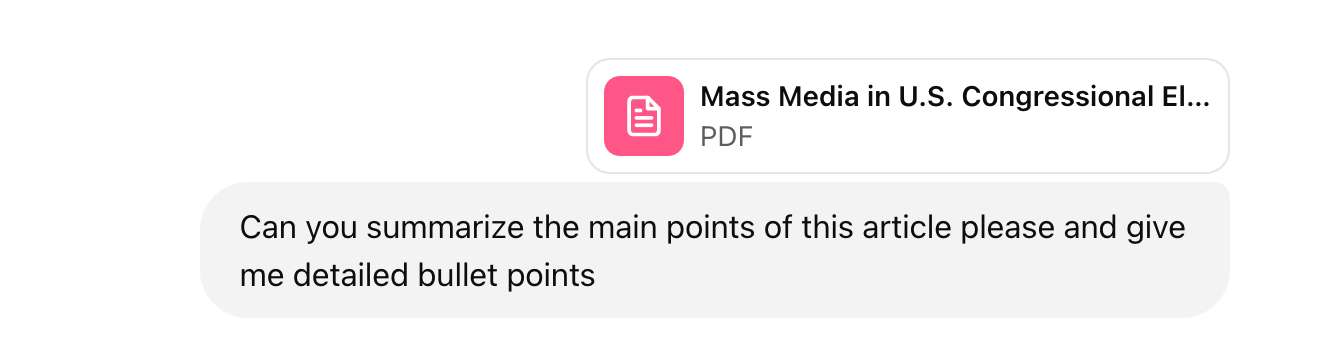
I uploaded an article on American elections into both ChatGPT and DeepSeek and asked both AI systems to “summarize the main points of this article and give me detailed bullet points”. ChatGPT’s PDF reader gave me short and easy-to-read bullet points, laid out the bullet points in an organized manner, and tried to make the notes as digestible as possible. The easy-to-read format and short sentences make ChatGPT’s system better for big takeaways and more useful for those who want to get a general sense of the topic without diving too deep into the details.
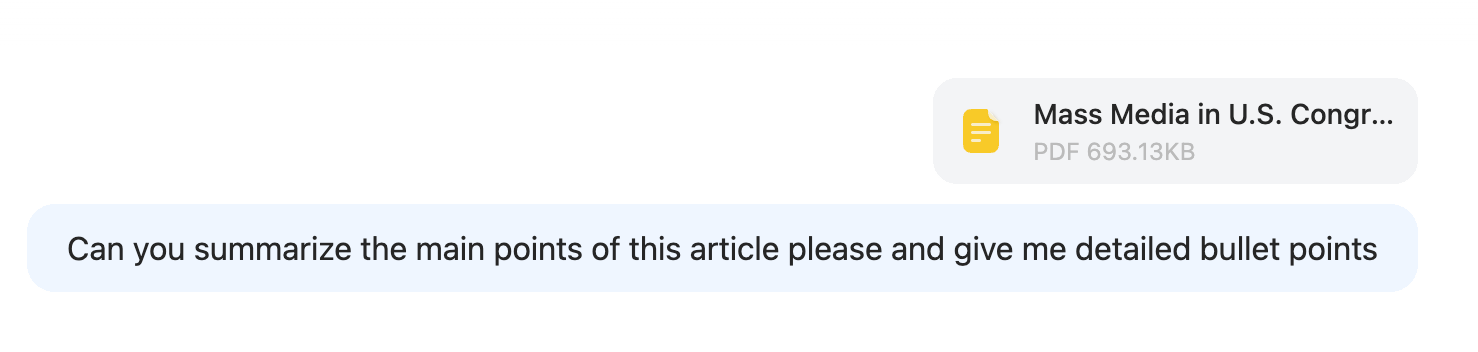
However, ChatGPT missed some of the key details of the article. For example, it didn’t mention ticket-splitting, which is where voters choose candidates from one party for one race and candidates from another party for another race. DeepSeek's notes included this information, but ChatGPT's did not. Also, DeepSeek included more comprehensive notes and tried to cover everything in the article in a detailed manner. For example, when summarizing the section of the article on Campaign Dynamics and Media Strategies, DeepSeek provides a more detailed answer, including specific headings such as ticket-splitting, media strategies, etc., whereas ChatGPT only gives the overall general idea of the topic. This makes DeepSeek a better option for those who want a detailed summary of an article, while ChatGPT is better for those who want a brief overall summary of an article.
DeepSeek doesn’t have a message limit, but ChatGPT does.
DeepSeek does not have a message limit, but when the server is busy, you get a notification that the server is busy and that you have to try again later.

Meanwhile, the free version of ChatGPT has a message limit. Those who use ChatGPT are limited to 40 messages every three hours. After a user reaches 40 messages, you will receive a notification saying that “you’ve reached the limit for this time”. The limit resets every three hours . This can sometimes make it hard to keep a long chat going because the chat cuts off for three hours after a user hits 40 messages.

Overall Takeaway
ChatGPT is better for quick summaries and getting overarching themes and ideas from articles and other pieces of media and putting them in an easy-to-understand manner. Also, ChatGPT gives users the ability to share and archive chats, which is one thing that DeepSeek currently doesn’t have and is part of the reason why I still use ChatGPT over DeepSeek. The archiving ability of ChatGPT allows users to better organize their chats and store them in a place where they can access them later without having to keep them on the main chat section. DeepSeek doesn’t have this, and because of that, you have to have all the chats in the main chat section, and there’s no way to remove them except for deleting the old chats. In this way, ChatGPT is better for storing and archiving old chats because you can always revisit them later, the way you can’t with DeepSeek.
However, DeepSeek outperforms ChatGPT in terms of actual content, as it provides answers specifically tailored to the prompt. DeepSeek gives more detailed answers and ones that feel more specific and more humanlike than ChatGPT’s robotic answers. DeepSeek is better at creating scripts, cover letters, and announcements because the system is able to replicate human speech better than ChatGPT. Another benefit of DeepSeek is that it is free for all users and doesn’t have a message limit. While there are times the server is busy, this generally is fixed quickly, and users don’t have to spend three hours waiting to use the service. DeepSeek is better for those who want detailed and specific responses to their prompts and questions.
This was my experience, but I’d love to know some of your thoughts in the comments. Which do you think is better? DeepSeek or ChatGPT?